A Sri Lankan customer in 2026 rarely walks into a shop cold. They scroll Instagram on the bus, ask a friend in a WhatsApp group, glance at the price on Daraz, check Google Maps for a branch, and only then decide whether to buy in store, order for delivery, or skip you for the competitor that showed up in all of those places. Retailers selling on a single channel are not just missing online sales. They are quietly disappearing from the consideration set before the customer ever picks up a wallet. This article looks at how the Sri Lankan retail buying journey has actually changed, why omnichannel is now the baseline rather than an upgrade, and how a small or mid sized retailer can start without rebuilding the business from scratch.
Who Is the Sri Lankan Retail Buyer in 2026?
To understand why a single channel is no longer enough, look at how a typical purchase actually unfolds today. The buyer is mobile first, social native, and price aware. They expect to find you wherever they happen to be looking, and they expect the answers to match.
A few realities that shape every retail decision now:
- Sri Lanka has more than 14 million internet users, and over 90% of them get online primarily through a mobile phone.
- Facebook and Instagram remain the default discovery layer for clothing, beauty, food, and home brands. WhatsApp is the default ordering layer for thousands of small retailers.
- Daraz, Kapruka, Glomark Online, and ikman.lk are normal stops in a shopping journey, even when the customer ultimately buys in store.
- Same day delivery from PickMe Food and Uber Eats has reset what fast feels like. Customers now expect a similar response window from any retailer they like.
- Cash on delivery still dominates payment, but card and local wallet usage is rising every quarter, especially in Colombo, Kandy, and Galle.
Put plainly, the average buyer touches three to five surfaces before a single rupee changes hands. If you only exist on one of them, you are competing for a sliver of attention.
What Does Omnichannel Actually Mean for a Retailer?
The word gets used loosely. In practice, omnichannel retail means four things working together as one system, not four separate systems with the same logo on top.
- One inventory. A sale on the counter, the website, the app, or a marketplace deducts from the same stock pool in real time. No double selling, no end of day reconciliation.
- One customer. The same loyalty points, the same purchase history, and the same contact preferences whether the customer last visited in store or tapped the app at midnight.
- One catalogue and one price. Product details, descriptions, and pricing are managed once and reflected everywhere. No staff member quoting one price while the website shows another.
- One dashboard. Sales, stock, orders, and customer insights from every channel live in a single view, so a manager can decide what to reorder, discount, or promote without exporting four spreadsheets.
That is the operational definition. The customer facing definition is simpler. Wherever they meet your brand, the experience is consistent, the stock answer is correct, and the next step is easy.
Why Has the Single Channel Stopped Working?
Three shifts have happened in parallel, and none of them are reversing.
Discovery moved online, even for in store purchases. Most customers under 40 research a product on Instagram, YouTube, or Google before they walk into a shop. If your business does not appear in that research, you do not get the visit. The in store transaction is now the second half of an online journey, not the start of one.
The marketplace effect. When customers compare you on Daraz against an importer in Pettah and a brand in Singapore, your listing has to be there to even be considered. Being absent from the marketplaces your category lives on is the same as not stocking the product.
Convenience expectations have hardened. Once a customer experiences buy online, collect in store at one retailer, they expect it from every retailer. Once they get a real time order tracking link from PickMe, a vague "we will call you" feels like a step back. Retailers who cannot meet the new floor lose to the ones who can.
What Does Staying on a Single Channel Actually Cost?
The cost is rarely a single dramatic event. It is a slow leak across discovery, conversion, retention, and resilience. Here is how a single channel retailer typically loses ground compared with an omnichannel competitor in the same category.
| Where the loss happens | Single channel store | Omnichannel store |
|---|---|---|
| Online discovery | Invisible to Google search | Indexed pages, social presence, marketplace listings |
| Out of hours sales | Lost | Captured by the website and app |
| Geographic reach | Walking distance from the shop | Anywhere a courier can deliver |
| Repeat purchase | Depends on the customer remembering | App push, email, loyalty nudges |
| Stock visibility | Customer has to call or visit | Live stock per branch, online |
| Resilience to disruption | One bad day closes the business | Online absorbs the dip |
Across the retailers we work with, the gap between a well run single channel store and a comparable omnichannel store typically settles between 20 and 45 percent of monthly revenue, depending on category. Fashion and beauty sit at the higher end. Specialised hardware sits at the lower end. The gap widens, not narrows, every quarter.
"A retailer who exists on the counter alone in 2026 is not just missing online sales. They are missing the research step that decides whether the in store visit happens at all."
The Four Pillars of a Modern Retail Setup
An omnichannel setup does not require launching four channels at once. It requires the channels you do run to share one back office. The four pillars below are the standard shape of a modern retail operation in Sri Lanka, and they are exactly what 360Commerce is built around.
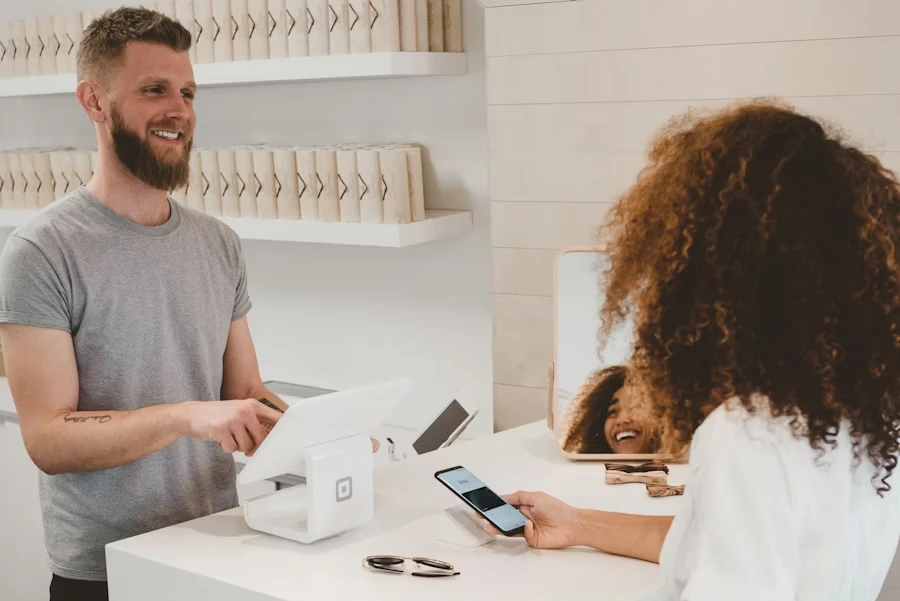
- In store POS. The counter is still where most rupees change hands. A modern POS prints receipts, applies discounts, supports card and wallet payments, and updates the central inventory the moment a sale happens.
- Online webstore. A branded ecommerce site is your storefront on Google, the destination of every social link, and the place that converts research into a sale outside opening hours.
- Branded mobile app. An app is where your most loyal customers live. Push notifications, faster checkout, loyalty cards, and order tracking all happen here, and the install is a strong signal that the customer has chosen you.
- Unified dashboard. The piece that makes the rest worth running. One place to see real time sales, branch performance, stock levels, customer behaviour, and what to reorder, without juggling four logins.
Which Retailers Need This Most, and Which Can Wait?
Not every business needs all four channels on day one. Honest sequencing depends on category, customer base, and how price competitive your market is.
| Category | POS | Webstore | App | Marketplace |
|---|---|---|---|---|
| Fashion & apparel | Essential | Essential | High value | High value |
| Beauty & personal care | Essential | Essential | High value | Essential |
| Grocery & supermarket | Essential | Essential | Essential | Optional |
| Electronics | Essential | Essential | Optional | Essential |
| Pharmacy | Essential | High value | Essential | Optional |
| Hardware & B2B supply | Essential | High value | Optional | Optional |
| Specialty & gifts | Essential | Essential | Optional | High value |
The simplest read of this table is that almost every retail category in Sri Lanka now needs at least the POS plus webstore combination, and most of them benefit from a branded app within twelve months. Marketplace presence is a separate decision that depends on category margin and how comfortable you are competing on a price led platform.
How Does a Sri Lankan Retailer Actually Get Started?
The most common reason retailers postpone omnichannel is the perceived size of the project. The reality is that the move from one channel to four is a phased rollout, not a single launch.
- Step 1. Get the back office right. Pick a platform where the POS, webstore, app, and dashboard share one inventory and one customer record from day one. This is the single most important decision in the entire process. Bolting channels onto disconnected tools is what causes the overselling and reconciliation pain that retailers later complain about.
- Step 2. Launch the channels you need today. If you already have a busy counter, a fast modern POS plus a webstore is the right starting point for most categories. Order tracking, payment gateways, and courier integrations are configured during setup, not after.
- Step 3. Add channels as the data justifies them. A branded app makes sense once a customer base is repeat ordering. A marketplace listing makes sense when the category and margin support it. Each addition piggybacks on the same back office, so the cost of growing the channel stack drops over time.
- Step 4. Train the team and watch the dashboard. The hidden return on omnichannel is operational. Stock decisions, branch performance comparisons, and promotional planning all get sharper once the data is in one place.
Worth noting
The riskiest version of omnichannel is the one assembled from four separate tools that do not talk to each other. A POS from one vendor, an ecommerce site from another, an app from a third, and a spreadsheet to reconcile them all is more painful than running a single channel. The whole point of an integrated platform is that the four channels behave as one.
The Verdict
- Discovery. Omnichannel wins. Customers research online before they ever walk in.
- Conversion. Omnichannel wins. The right channel at the right moment closes the sale.
- Retention. Omnichannel wins. Loyalty and repeat purchase live where the customer already is.
- Resilience. Omnichannel wins. One disrupted channel does not close the business.
- Operational visibility. Omnichannel wins, but only when the channels share one back office.
- Setup effort. Single channel is simpler to start. Omnichannel is simpler to scale.
For a Sri Lankan retailer planning the next phase of growth, the question is no longer whether to be on multiple channels. It is which two to launch first, and how soon the others follow. 360Commerce is built so the answer to both questions can be incremental rather than all or nothing. Start with the counter and the webstore, share one inventory, and add the app and marketplace listings as the customer base earns them.